Books
New · October 6, 2026
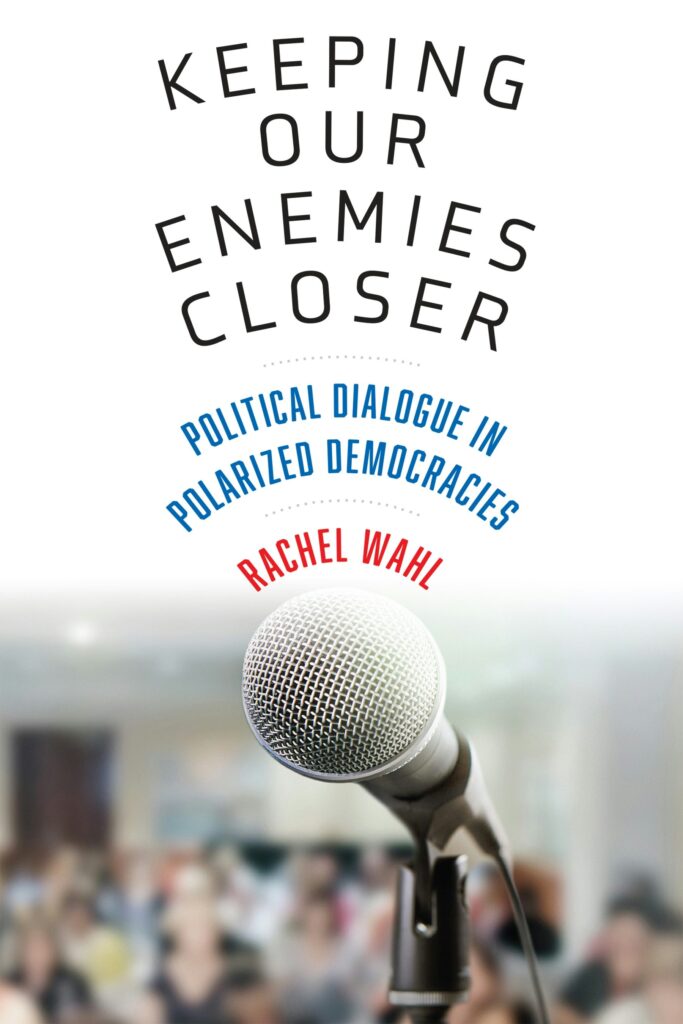
Keeping Our Enemies Closer
Political Dialogue in Polarized Democracies
University of Pennsylvania Press
In Keeping Our Enemies Closer, Rachel Wahl moves beyond abstract debate to examine what actually happens when people engage those with whom they profoundly disagree. Drawing on years of qualitative research with college students, community members, activists, and public officials, she explores why these conversations are so difficult, what participants learn from them, and where dialogue falls short of its promises.
About the book
What does it take for a progressive student and a conservative peer to view each other with respect? Can trust form between a police officer and a community member after years of tension and mistrust? At a time when political polarization seems insurmountable, Rachel Wahl offers a rare glimpse into what happens when people with opposing views sit down and talk, not to debate or prove a political point but to understand the experiences, hopes, fears, and ideas that drive their disagreements.
Wahl draws on political theory to examine two cases: structured dialogue between students, and a series of forums held between police officers and community members. Rather than idealizing dialogue, the book reveals its complexity, where it succeeds, where it falters, and how it can reshape not just minds, but institutions. An essential read for educators, activists, and policymakers, it has much to offer anyone seeking to understand how connection is forged, or frayed, in twenty-first-century America.
Advance praise
Keeping Our Enemies Closer moves beyond familiar platitudes about the importance of dialogue among people who disagree about politics. Instead, the book delves deeply into the different perspectives of police officers, community activists, college students and other everyday people who engage in these conversations. By bringing to life with narrative richness what actually happens for these people when they talk to each other, the book uniquely shows why such conversations are so emotionally and politically fraught, what participants gain or lose through them, and what these difficult exchanges reveal about the possibilities and limits of dialogue as a means to sustain democracy.
Beth Macy, author of Dopesick and Paper Girl
Wahl’s attention to the layered context of dialogue makes this book unique. She keeps in focus the full humanity of the individual, the relationships that dialogue remakes, the institutions in and about which we dialogue, and the democratic goals of the endeavor. The exchanges and reflections stayed with me. They help reframe the role of dialogue on campus and beyond.
Sigal Ben-Porath, author of Free Speech on Campus and Cancel Wars
In this searching and illuminating book, Rachel Wahl considers whether and how talking across difference can help Americans heal deep divides. By combining practical experience, empirical investigation, and a grasp of the philosophical underpinnings of democratic life, she avoids both cynicism and naivete and gives readers a realistic sense of what the hard work of democratic engagement might have to offer us.
Yuval Levin, American Enterprise Institute, author of American Covenant
Rachel Wahl’s book is required reading for anyone concerned about rising polarization and political violence, and seeking evidence-based ways to respond. She moves us beyond simple, one-size-fits-all approaches to a nuanced understanding of initiatives designed to help us talk across the chasm created by our differences. She shows us how, when, and why we can remain true to our values and goals and still recognize that those with very different beliefs are valid co-creators of our democracy.
Melody C. Barnes, Executive Director, Karsh Institute of Democracy, University of Virginia
A compelling and important book that demonstrates why meaningful conversations across political differences are essential to democratic life. Drawing on rich empirical research and vivid case studies, Rachel Wahl provides powerful insights into when political dialogue succeeds, when it fails, and why it matters. A must-read for anyone interested in strengthening communities, bridging political divides, and sustaining democracy.
Diana Hess, Dean Emerita, School of Education, University of Wisconsin-Madison
In this discerning and immersive narrative, Rachel Wahl weaves together political theory, rigorous analysis, and the voices of polarized Americans themselves, grappling with the possibilities and limits of this democratic endeavor. Wahl powerfully argues that dialogue is more of a nuanced performance art than a single formula, and offers a practical and versatile guide for leaders, educators, and engaged citizens committed to preserving our common project of democracy.
Mariano-Florentino (Tino) Cuellar, President of the Carnegie Endowment for International Peace
Keeping Our Enemies Closer uses fascinating case studies to derive insights and guidance about whether to join dialogues, how to approach these conversations, whether to disclose one’s own views fully, and other matters that are urgent in this time of polarization. It will also be useful for people who organize dialogues. It is nuanced, deeply researched, and relevant to practice.
Peter Levine, Tufts University, author of What Should We Do? A Theory of Civic Life
As polarization continues to shape how people relate to one another, this book offers a nuanced examination of dialogue’s role in democracy. Grounded in rigorous research and lived experience, it helps educators and practitioners connect this work to broader goals and outcomes, strengthening student learning, deepening community impact, and engaging across political difference with greater honesty and care.
Bobbie Laur, President of Campus Compact
2017
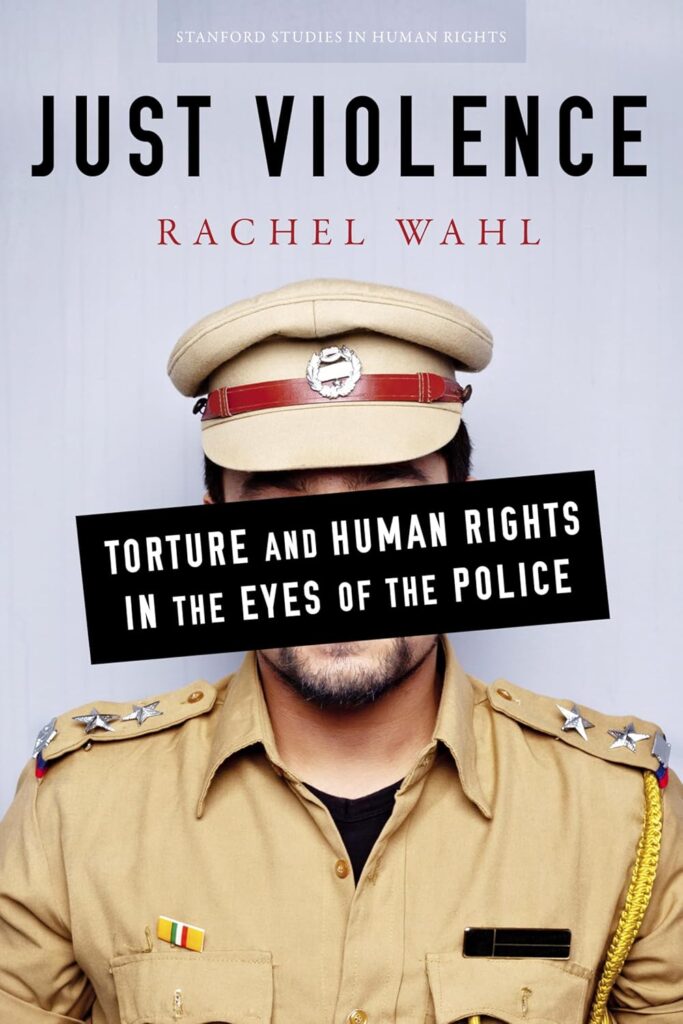
Just Violence
Torture and Human Rights in the Eyes of the Police
Stanford University Press · Stanford Studies in Human Rights
An in-depth study of how police officers in India understand violence, justice, and human rights. Just Violence examines why human rights training so often fails to reduce torture, and what police beliefs reveal about the gap between local conceptions of justice and the principles of the international human rights system.
About the book
Police who engage in torture are condemned by human rights activists, the media, and people across the world who shudder at their brutality. Stark revelations about torture by American forces at places like Guantanamo Bay have stoked a fascination with torture and debates about human rights. Yet despite this interest, the public knows little about the officers who actually commit such violence. How do the police understand what they do? How do their beliefs inform their responses to education and activism against torture?
Just Violence reveals the moral perspective of perpetrators and how they respond to human rights efforts. Through interviews with law enforcers in India, Rachel Wahl uncovers the beliefs that motivate officers who use and support torture, and how these beliefs shape their responses to international human rights norms. Although on the surface Indian officers’ subversion of human rights may seem to be a case of “local culture” resisting global norms, officers see human rights as in keeping with their religious and cultural traditions―and view Western countries as the primary human rights violators. However, the police do not condemn the United States for violations; on the contrary, for Indian police, Guantanamo Bay justifies torture in New Delhi. This book follows the attempts of human rights workers to both persuade and coerce officers into compliance. As Wahl explains, current human rights strategies can undermine each other, leaving the movement with complex dilemmas regarding whether to work with or against perpetrators.
Praise
In this compelling book, Rachel Wahl shows how Indian police with human rights training justify torture as a means to protect the rights of victims and the community. Just Violence will resonate widely with academics and practitioners who want to better understand how local cultures vernacularize ideas about human rights.
Jack Snyder, Columbia University
Why does human rights training fail to diminish the use of torture by police? Rachel Wahl’s fascinating book argues that police torture is not simply the product of indifference or the legacy of colonial rule but also the moral compass of police themselves as they endeavor to produce security, justice, and order. This provocative book offers new insights into human rights education and the enduring tensions between rights and security.
Sally Engle Merry, New York University